
The Substation at Dawn
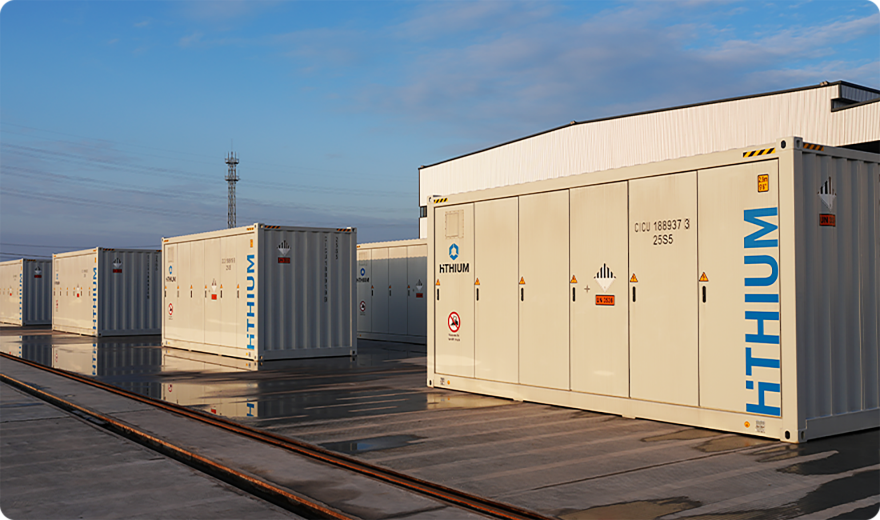
I walked onto the site before sunrise, boots wet from the dew, when the feeder flickered like a half-told secret. I was there to audit a 10 MW system installed by one of the larger battery energy storage system manufacturers. The second line in my notes reads: hithium energy storage, because that’s where the data trail pointed. The meter logged 59.72 Hz for a breath, then recovered. A small dip, sure, but the alarms didn’t line up with the event window—odd, but instructive. The BMS showed one story, the inverter logs another, and the SCADA historian a third. In my 17 years working utility-scale storage across Texas, Nevada, and the Inland Empire, I’ve learned that mismatched stories mean hidden losses. In that yard, the container fans spiked 11 kW for thirty minutes with no thermal trigger on record (someone forgot to correlate ambient temperature). So the question that haunted me on that cold morning: where is the project bleeding value, and who is owning the fix? I kept walking, because the quiet hum always gives up the truth eventually—if you know where to listen.
Let’s cut through the noise and step into the weak links that never make it into glossy spec sheets.

Where Legacy Thinking Breaks Under Load
I’ve watched teams buy systems like they buy trucks: capacity first, everything else later. That approach fails. The old playbook assumes one-size BMS logic, static power converters, and a single SCADA handshake will behave under stress. They don’t. On a 2 MW/4 MWh site in Yuma in Q4 2022, the advertised 1C discharge was throttled to 0.5C by a conservative inverter stack. The label said speed; the firmware said no. Traditional setups hide these constraints at the integration edge—between DC strings, the BMS, and the plant controller. Look, this is the part folks skip over in meetings. If the response curves aren’t tuned to the grid code, your SoC window shrinks, your frequency response lags, and you end up chasing phantom derates. Worse, parasitic load from HVAC can eat 6–10% of the day if the controls ignore ambient forecasts. That’s real money, and it doesn’t show in a brochure.
What did the old playbook miss?
Two things. First, observability at the component level—edge computing nodes on each rack, not just a plant-level historian. Without it, you can’t catch cell drift early or prove thermal runaway margins. Second, enforceable coordination. I want the power converters, BMS, and site controller to negotiate in real time, with priority rules that survive a storm. In 2021, a coastal site near Corpus Christi logged 300+ minor alarms per hour during a wind ramp. The crew muted them—understandable, but costly. It masked a DC bus imbalance that shaved 14% off round-trip efficiency for a week. And yes, I raised an eyebrow. The cause wasn’t the chemistry; it was the handshake.
From Better Parts to Better Principles
When I compare solutions, I don’t ask for more capacity. I ask for cleaner control. The difference shows up fast with new technology principles. We’re seeing battery energy storage system manufacturers separate fast-path control (millisecond-level inverter logic) from slow-path analytics (fleet optimization) so the grid event gets the quick hand, while the AI—if you must call it that—stays upstream. Pair that with cell-level thermal sensing and rack-level State of Charge harmonization, and you stop fighting the system. Semi-formal note from last month’s rollout in Fresno: when the inverter droop curve matched the BMS ramp limits, the site hit 95% of promised power within 200 ms during a 20 MW feeder trip. No drama. Minimal overshoot. The kind of performance you can insure. I prefer solutions that keep the spec honest when the wind kicks up—because that’s when you find the seams.
What’s Next
Forward-looking, I’m betting on three shifts. First, chemistry-agnostic control stacks that treat LFP, NMC, or LTO as modular profiles—swap cells, keep behavior stable. Second, fleet-wide learning loops that adjust C-rate and cooling setpoints by weather band (Phoenix July is not Bakersfield February). Third, inverter orchestration that assigns roles—some strings for fast frequency, others for energy shifting—on the fly. The big win? Fewer conflicts between the BMS and the inverter brain, and far less SCADA noise. This isn’t hype; it’s the cleanup after a decade of bolt-on integrations. When I toured a freshly commissioned yard outside Henderson in May 2024, the site controller presented a single, merged alarm feed. One page, clean priorities, no alarm storms—suddenly the night shift could breathe. That design felt grounded, not flashy—solid work that respects the crew that lives with it.
Advisory close, because choices matter: (1) Demand verifiable response metrics at 50%, 80%, and 100% SoC—under heat and cold—before signing. (2) Score the system on parasitic load discipline; anything above 5% daily overhead warrants a redesign. (3) Audit the integration boundary: BMS-inverter-SCADA. If the vendor dodges those details, walk. I’ve made those calls at 2 a.m. in dusty yards, and the projects that age well share one habit: they measure what hurts and wire around it. If you need a place to start, I’ve found the calm, layered approach at HiTHIUM matches that habit.